
Trading the SpaceX (SPCX) Post-IPO Rally: A 6-Month Bull Call Backspread Strategy
Following SpaceX’s milestone public debut under ticker SPCX, the stock has settled into a consolidation phase around $136–$137 per share. With a strong underlying bullish thesis driven by Starlink revenue growth, high launch cadence, and structural passive index inclusion, investors seeking outsized upside exposure over the next six months (leading into early 2027) face a strategic dilemma: direct stock purchases require heavy capital allocation, while simple call buying carries severe time decay risk.
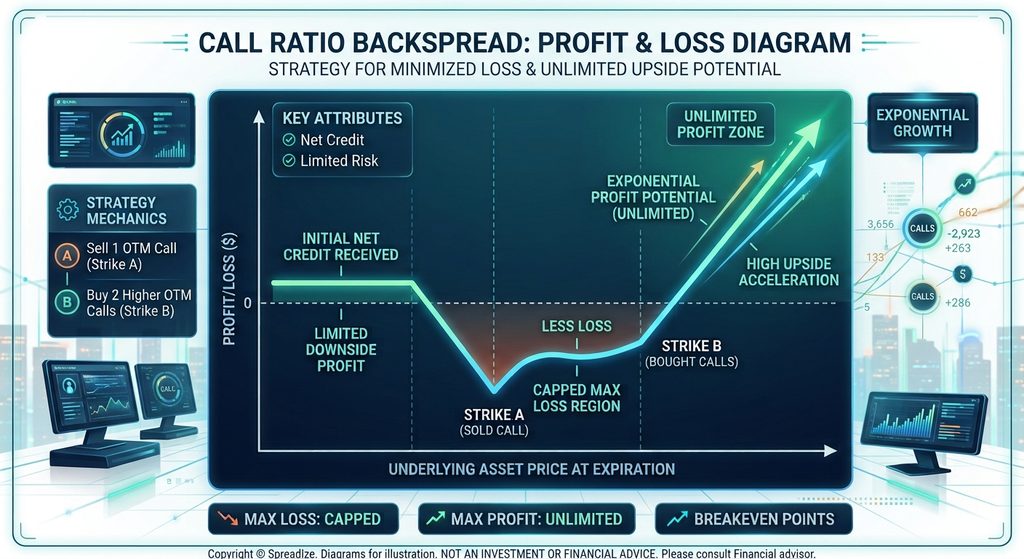
A Bull Call Ratio Backspread offers an asymmetric solution—allowing traders to finance a long, leveraged upside position using sold options while generating downside protection against a retest of lower support levels.
Strategy Structure: The Bull Call Backspread (1×2)
A Bull Call Backspread involves selling 1 lower-strike call (ITM/ATM) and buying 2 higher-strike calls (OTM) with the same expiration date. To capture catalysts such as the late-2026 lockup expiration and Q3/Q4 earnings disclosures, a 6-month time frame (approx. 180 DTE) is ideal.
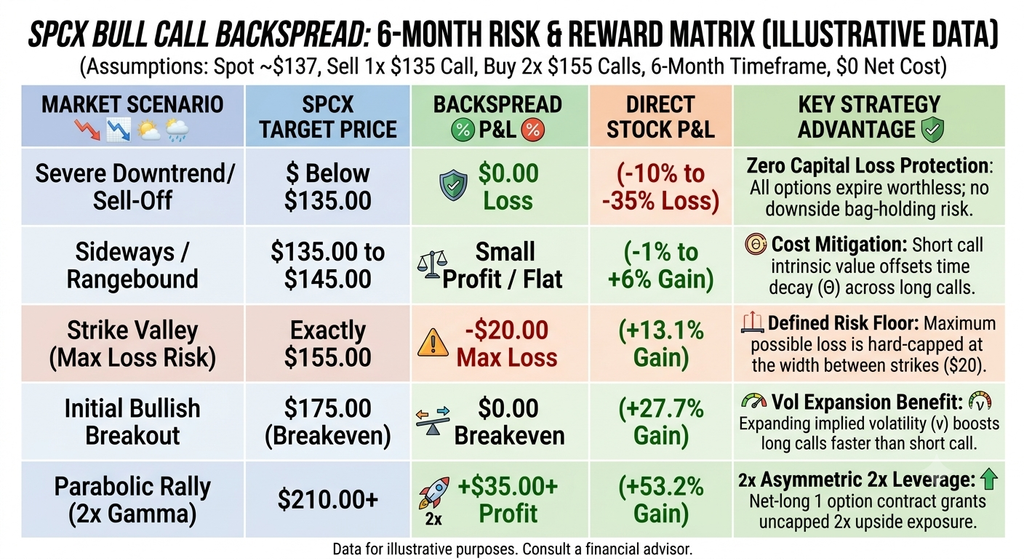
Hypothetical Trade Setup (Spot Price: ~$137)
- Sell (1x) Long-Term Call: 135 Strike (ATM) @ ~$20.00 Credit
- Buy (2x) Long-Term Calls: 155 Strike (OTM) @ ~$10.00 Debit each ($20.00 Total Debit)
- Net Initial Cost: $0.00 (Even-Money / Small Credit)
- Buying Power impact: $20 (The difference between the strikes)
Important Note: The anticipated exit strategy is to exit on 30% profits over the held capital ($20). Since the spread is for about 6 months, it’s a reasonable expectation that can be met considering the news flow SpaceX is getting. In any case, exit before 50 days to expiration.
Strategic Advantages for SpaceX Over Next 6 Months
- Uncapped Upside Volatility Capture: Because you are net long one call option (long 2, short 1), the position benefits from uncapped upside profit potential and expanding volatility, if SPCX experiences a parabolic rally past $175.
- Built-in Downside Protection: If a market-wide selloff occurs and SPCX drops sharply below $135, both the long and short options expire worthless. If entered for a net credit or zero debit, you lose nothing on capital allocated, outperforming stock ownership.
- Volatility Expansion (Vega) Benefit: High-growth stocks with heavy catalyst calendars often see option volatility spike ahead of earnings. An increase in implied volatility increases the value of the two long calls faster than the single short call, expanding overall position value prior to expiration.
Key Risks & Trade Management
- The “Valley of Death” Risk: The maximum loss occurs if SPCX closes exactly at the upper strike price ($155) at expiration. In this scenario, the short 135 call is fully intrinsic ($20 value), while both long 155 calls expire worthless.
- Management Rule: To manage strike risk, plan to exit or adjust the trade 30 to 45 days before expiration or when SPCX trends into the $150–$160 range to capture volatility expansion before final time decay accelerates.
To tailor this strategy to your specific portfolio, please clarify:
- Capital & Account Type: Are you trading in a margin account that permits uncovered option legs, or do you prefer defined-risk spread structures (e.g., call debit spreads)?
- Price Target & Conviction: What is your specific price target for SPCX over the next 6 months?
- Volatility Tolerance: Are you comfortable managing position adjustments mid-trade if SPCX moves sideways into the strike valley?
There are several recent IPOs and many more to come related to AI. Make sure you get exposure to the high growth companies with minimum capital exposed to risk. Talk to Spreadize for precise implementation of this highly lucrative strategy.